
Hạ Long journal
Stories that take the journey further.
Food, landscape, culture, and ways to travel through the bay - reported from local and official sources.
Food
View all ↗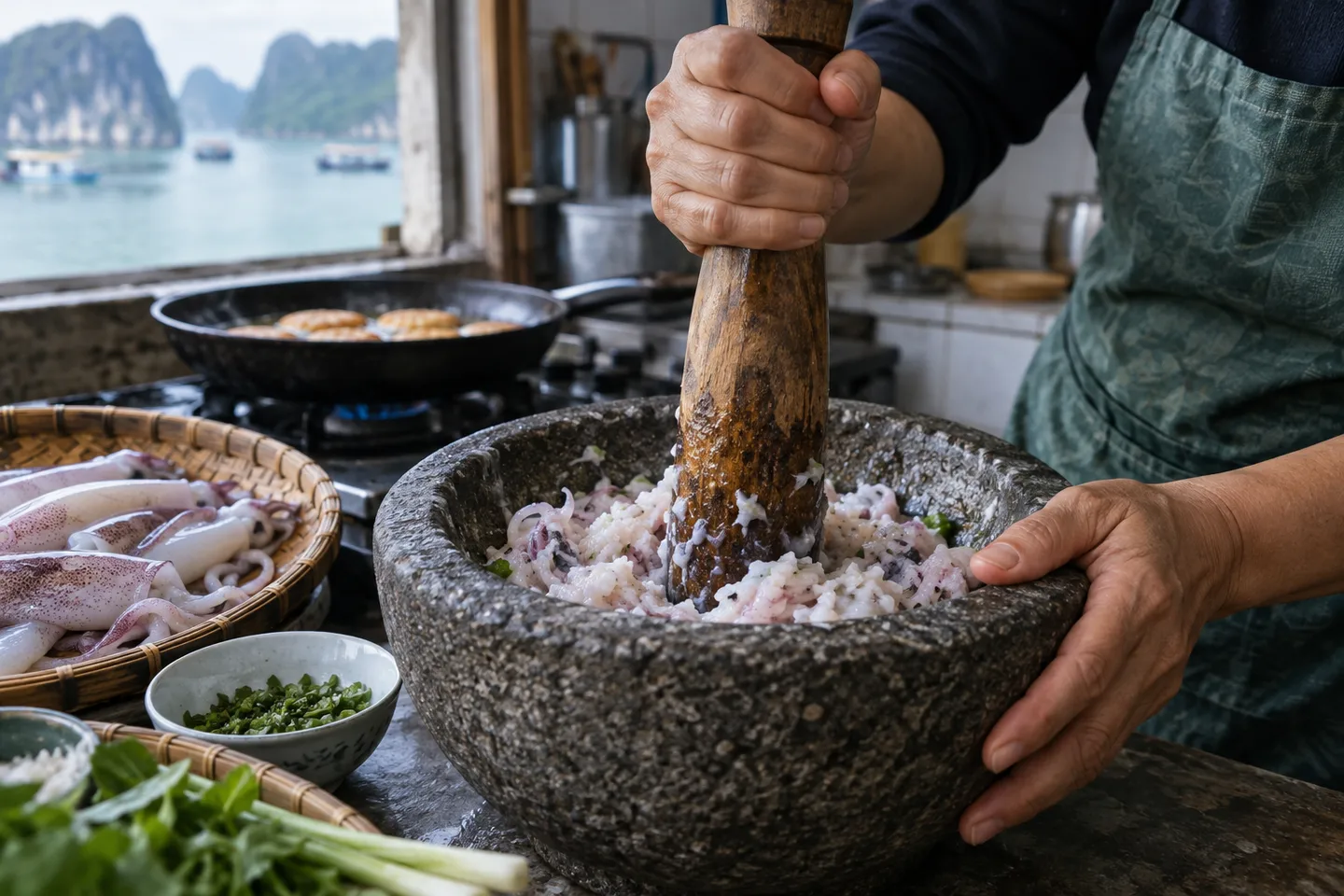 Hạ Long squid cake: texture starts with the mortarWhy does hand pounding keep coming up in accounts of Hạ Long squid cake, and what does it tell us about the dish?
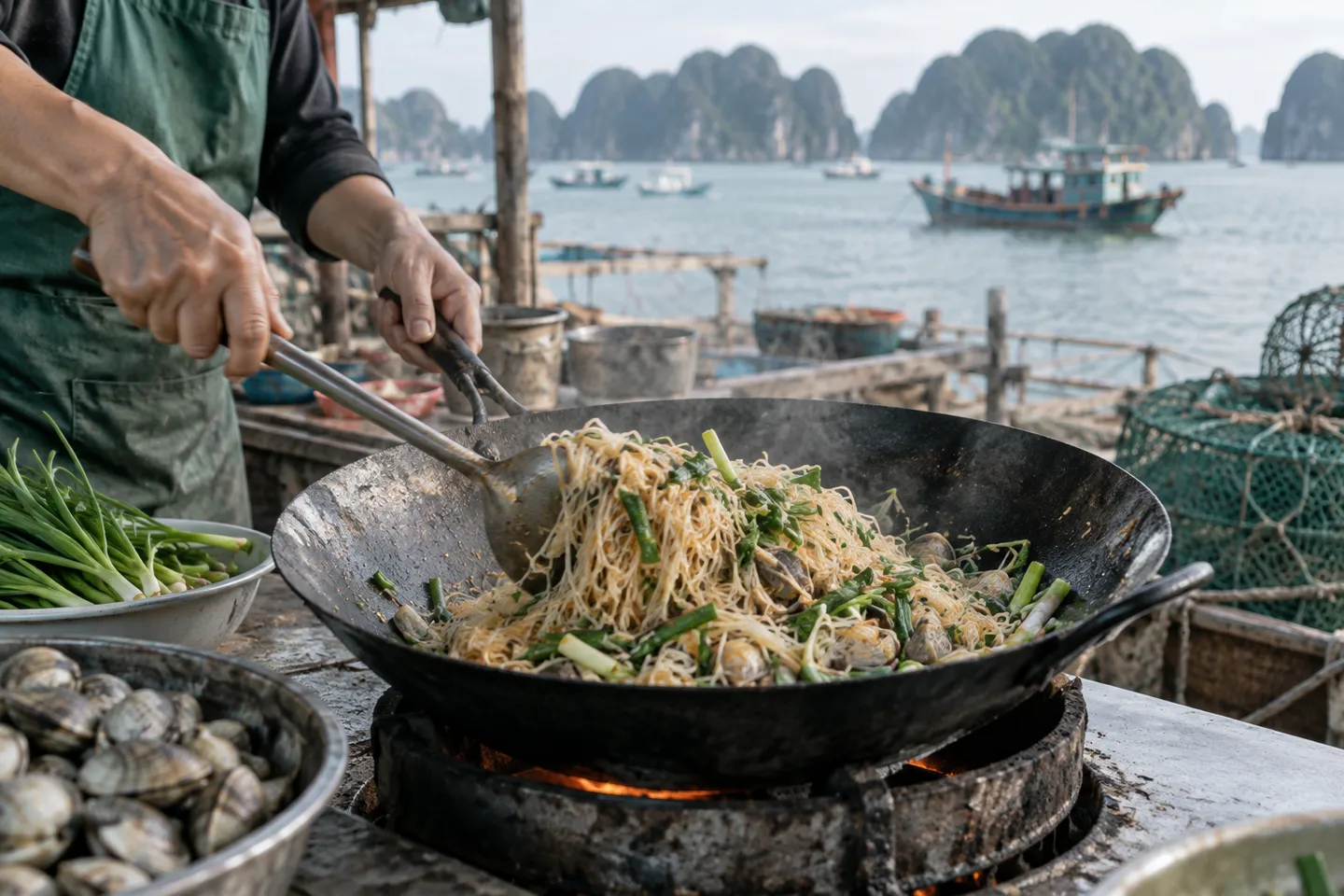 Quảng Yên ngán noodles and the taste of an estuaryA modest noodle dish tells a story about ngán clams, brackish water, and how cooks in Quảng Yên use local ingredients.
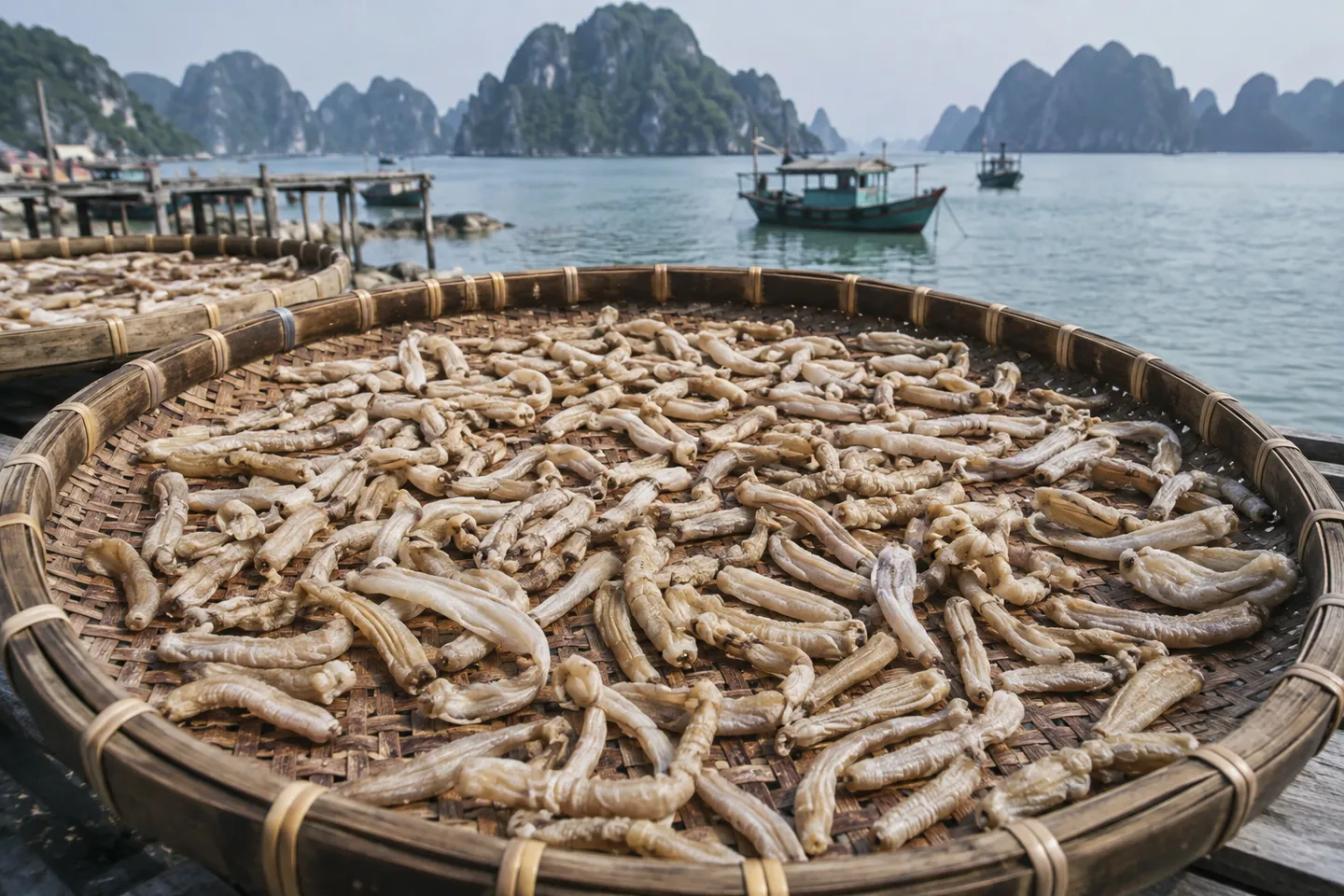 Vân Đồn sa sung: a prized ingredient with two sidesSa sung is used in broth and dried dishes, but its story also involves harvesting and aquaculture.
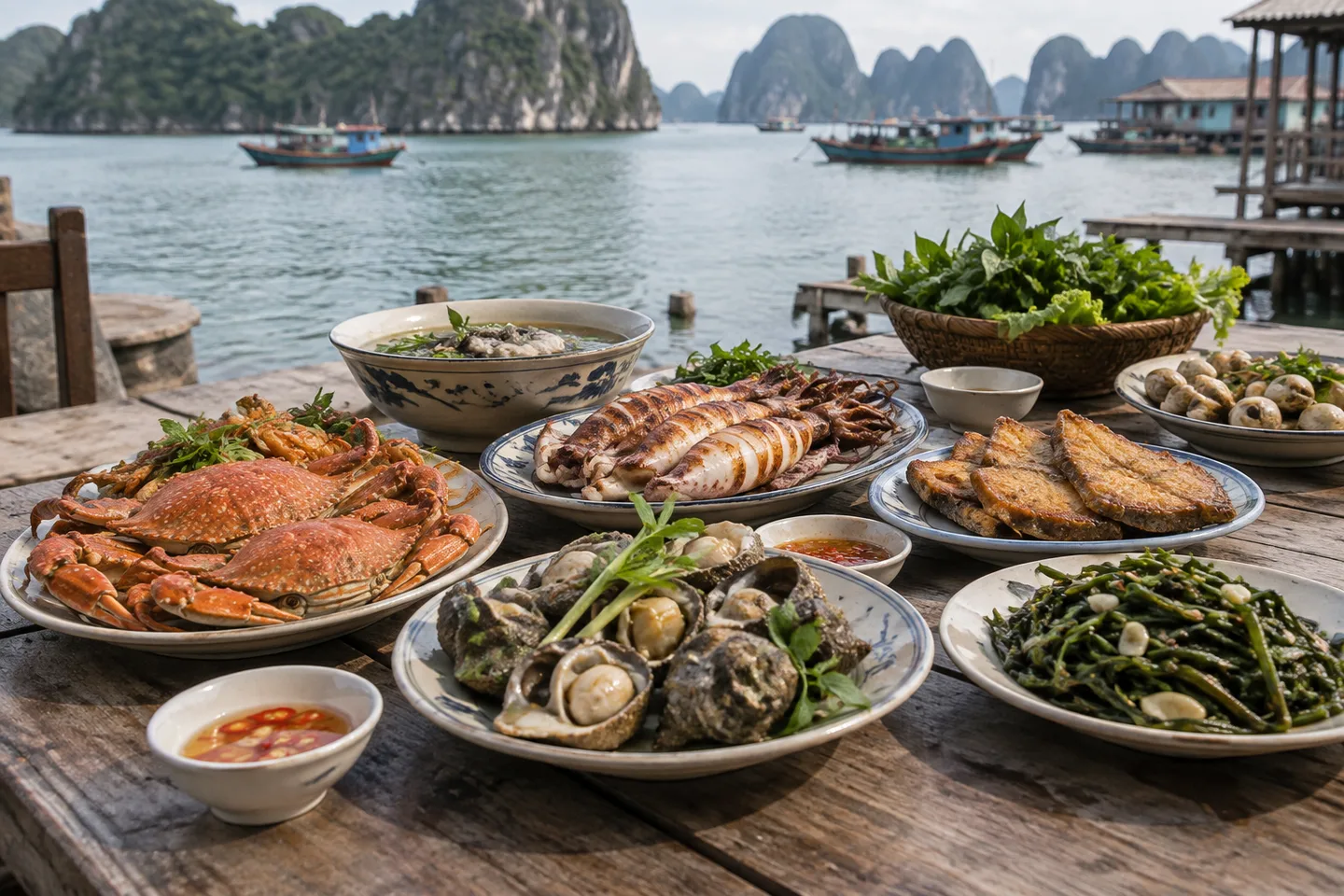 One province, many food regions: a Quảng Ninh mapSquid cake, Tiên Yên rolls, local chicken, Đông Triều ragworm, and Bình Liêu stir-fried noodles take the food story beyond Hạ Long.
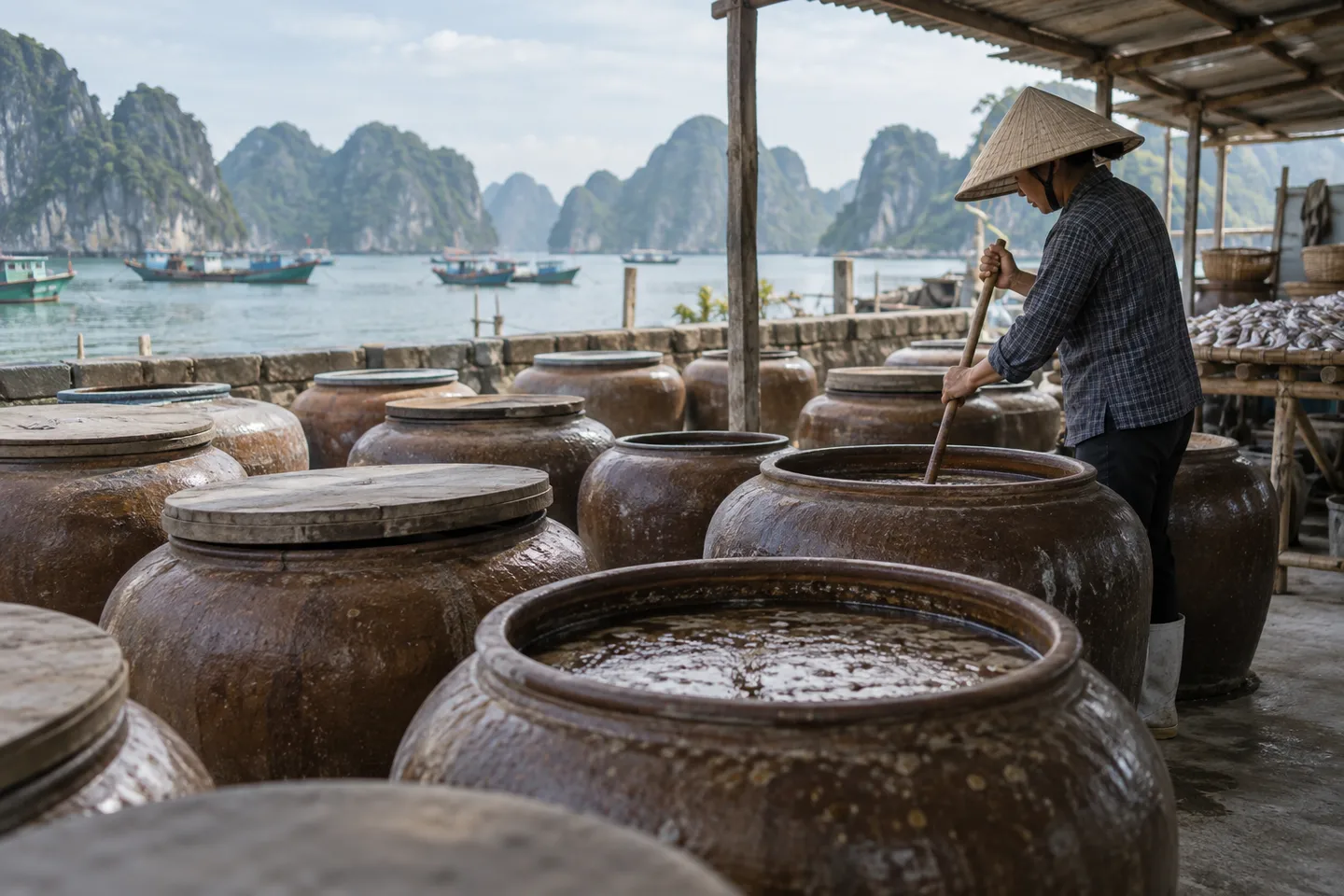 Vân Đồn fish sauce and the memory of a portIn a coastal place, fish sauce can carry stories of ingredients, craft, and trade.
Experiences
View all ↗ Through Luồn Cave: a trip shaped by the tideLuồn Cave is a water passage through a limestone island into an enclosed lake. The tide shapes both access and the experience inside.
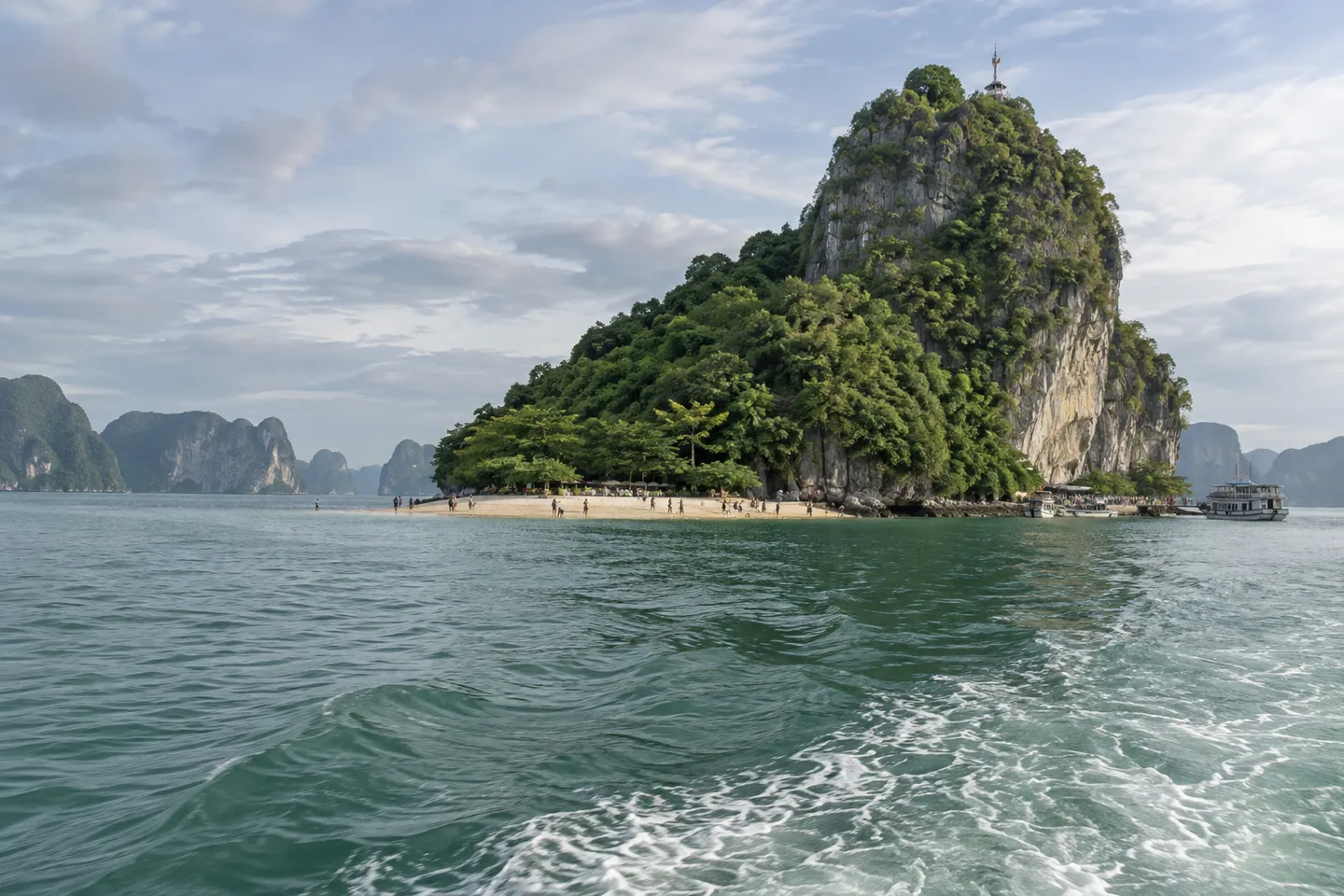 Ti Tốp Island: a small beach and an uphill climbTi Tốp is remembered for two different visits: spending time at the beach and climbing to a higher viewpoint.
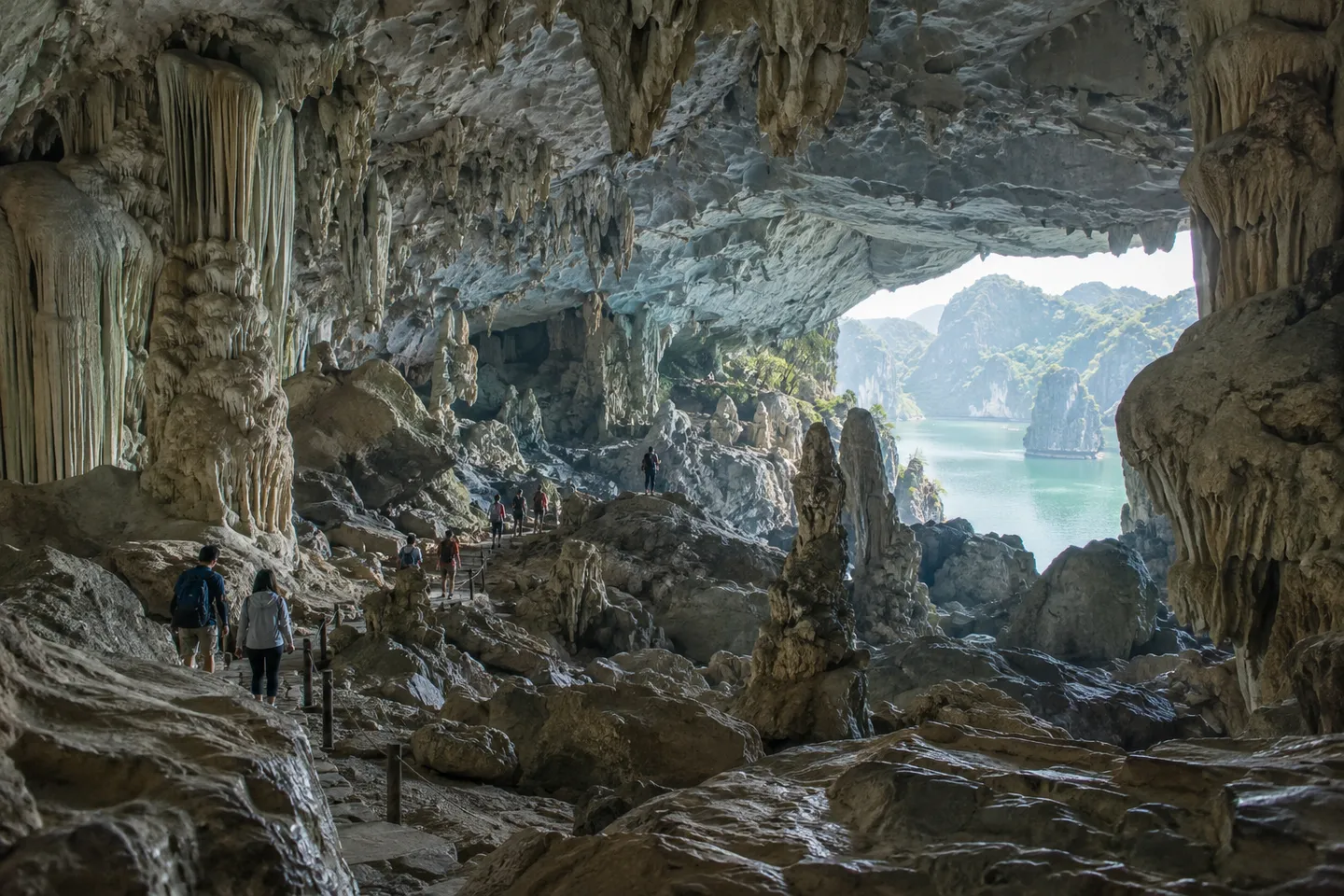 Sửng Sốt Cave: give your eyes time to adjustInside this large cave, look beyond the formations to how light and space shift as you move.
 Cửa Vạn: songs in the setting of a fishing villageAt Cửa Vạn, living heritage belongs to a community and a specific visitor programme; performance schedules should be confirmed.
 Leave a lighter footprint on the bayA few simple habits can reduce the extra pressure a visit places on the bay.
Places
View all ↗ Ha Long-Cat Ba: one heritage across connected watersThe 2023 extension frames the limestone and island landscape as a connected geological system.
 Where Sửng Sốt Cave fits on a bay routeSửng Sốt Cave is a stop on the VHL2 route. Check current access arrangements before visiting.
 Luồn Cave and the lake enclosed by karstA low passage connects the bay to a lake within the karst. Tides and visitor arrangements shape the experience.
 Ti Tốp Island: a name that recalls 1962The island’s name recalls a visit by Gherman Titov and Hồ Chí Minh; today it is a common stop on bay routes.
 Quảng Ninh Museum: reading the province through sea, mines, and memoryThe museum brings together natural and historical stories from a province larger than Hạ Long city alone.
Itineraries
View all ↗ VHL2: a multi-stop route to match to your groupVHL2 lists several well-known stops. Balance time on the boat, walking, and your group’s needs.
 Choose a bay route for what you want to rememberInstead of seeking the route with the most stops, begin with your interests: caves, beaches, fishing villages, or a slower time aboard.
 A day on the bay: leave space between stopsA comfortable day needs buffer time, meals, and rest-not just a list of stops.
 A rainy day in Hạ Long: change pace, not just the planWhen weather is poor for outdoor activities, a city museum is an option; bay trips should follow operator updates.
 A bay trip with children: fewer stops, easier paceWith young children, consider stairs, time aboard, sun, and facilities before choosing a route.
Culture
View all ↗ Chèo đường: songs exchanged across the waterChèo đường belongs to coastal life, where singing accompanied work and community occasions.
 Cửa Vạn: a fishing village story told from the waterCửa Vạn connects memories of bay livelihoods with artifacts, crafts, and cultural practices.
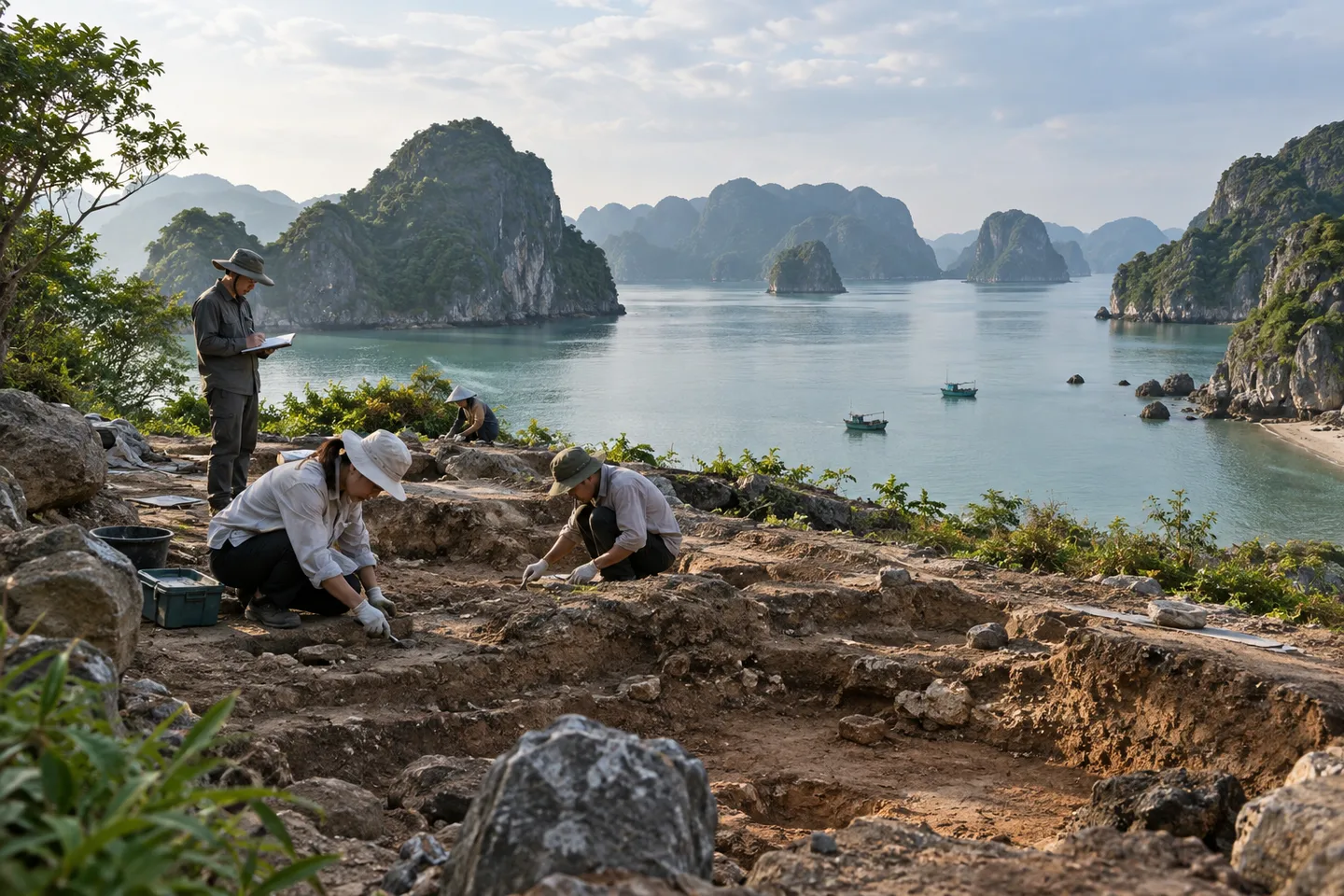 Soi Nhụ, Cái Bèo, and layers of early settlementArchaeological sites around the bay show a human story that reaches far beyond modern tourism.
 The mining region in the story of Quảng Ninh MuseumCoal, the sea, and urban life all appear in the museum’s account of Quảng Ninh.
 Trà Cổ: festival, communal house, and community memoryTrà Cổ Festival is tied to the communal house and community calendar in Vietnam’s northeastern border region.